Fishing Rod Materials – A Complete Guide to Modern Rod Construction
Fishing rods might look simple on the surface, but the magic of how they work lies deep within their materials. Whether you’re casting into a quiet lake at dawn or battling a powerful saltwater giant, the core material of your rod determines everything—from how far you cast to how well you feel a subtle nibble.
Over the years, fishing rod construction has evolved dramatically, moving from traditional bamboo to advanced carbon fiber, nano-resin, and titanium-infused designs. Understanding the materials behind your rod isn’t just for gear nerds—it’s essential for choosing equipment that matches your fishing style, environment, and target species.
Today’s anglers have more choices than ever, and each option comes with unique strengths and weaknesses. Some materials emphasize sensitivity, giving you the ability to feel even the faintest bites. Others focus on durability and power, built to withstand harsh environments and powerful fish. And then there are premium materials engineered for professional-level performance, delivering unmatched lightness and precision.
This guide breaks down every major fishing rod material, from traditional to cutting-edge. You’ll learn how each material performs, why anglers prefer one over another, and how to choose the perfect rod for your needs. By the end, you’ll understand not just what fishing rods are made of—but why it matters.
Table of Contents
Understanding the Role of Materials in a Fishing Rod
The material of a fishing rod isn’t just a marketing buzzword—it fundamentally shapes how the rod performs on the water. Anglers often talk about “sensitivity,” “power,” and “action,” but all these characteristics stem from the material used to construct the rod blank, guides, and handle.
Flexibility and Action
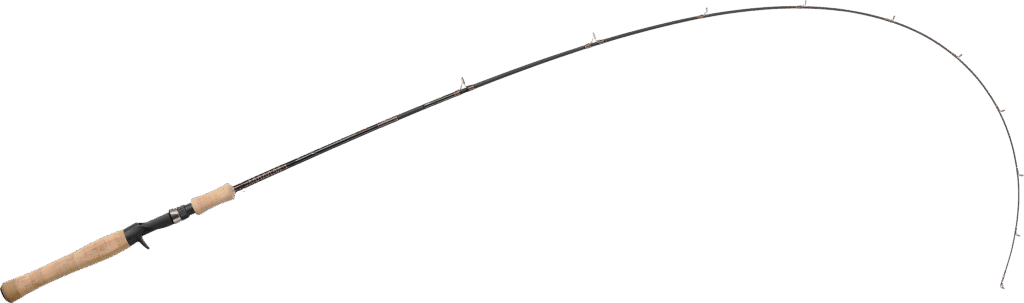
Different materials bend differently. For instance, bamboo and fiberglass rods typically have a slower action, meaning they bend more deeply along the blank. This makes them forgiving for beginners and ideal for casting heavier lures. Graphite rods, on the other hand, are stiffer and faster, offering sharper hook sets and greater casting distance.
Strength and Durability
Materials dictate how much force a rod can handle before breaking. Fiberglass rods are extremely resilient, making them ideal for fighting larger fish or enduring harsh conditions. Graphite rods, while stronger in tensile strength, are less impact-resistant and require careful handling. Composite rods attempt to offer the best of both worlds, combining graphite’s sensitivity with fiberglass’s toughness.
Weight and Fatigue
Heavier rods can tire an angler quickly, especially during long fishing sessions. Modern materials like high-modulus graphite and nano-carbon are incredibly light without sacrificing strength. This allows anglers to fish for hours with less fatigue, improving both performance and enjoyment.
Sensitivity
Sensitivity is critical for detecting light bites, particularly when targeting finicky species like trout or panfish. Graphite and carbon fiber rods excel in this area because they transmit vibrations more efficiently from the line to the angler’s hand. Fiberglass rods, while durable, are less sensitive but still highly effective for trolling or casting larger lures.
Casting Distance and Accuracy
Material stiffness and weight distribution affect how far and accurately you can cast. Stiffer, lighter rods made from graphite or composite materials allow longer, more precise casts, whereas heavier, slower rods require more effort but can handle larger lures with better control.
By understanding how materials influence these aspects, anglers can make informed decisions. A rod isn’t just a stick—it’s an extension of your senses, designed to optimize every moment on the water.
Traditional Fishing Rod Materials
Bamboo
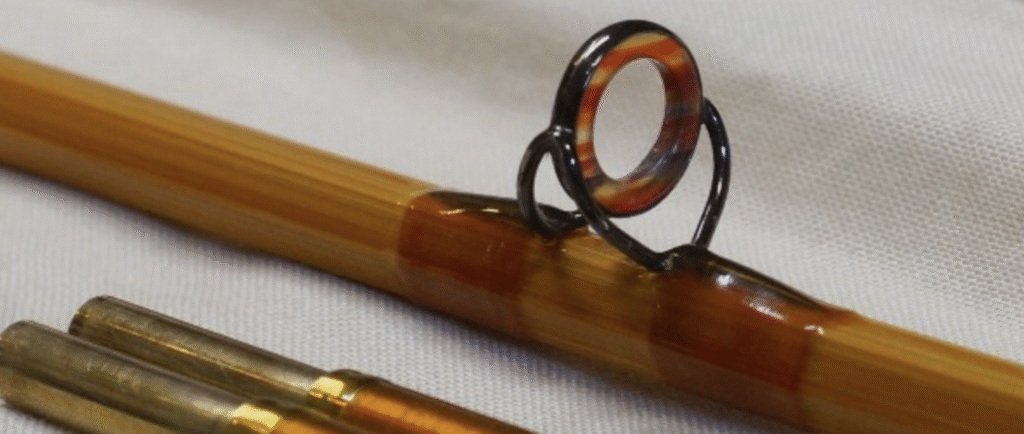
Bamboo was once the gold standard of fishing rod craftsmanship, and many anglers still regard it as the soul of traditional fishing. Before synthetic materials existed, bamboo offered a remarkable combination of strength, flexibility, and natural taper that made it ideal for rod building.
The most famous type—Tonkin cane—became known for its straight fibers, resilience, and aesthetic beauty. Bamboo rods were meticulously handcrafted, often taking weeks or months to produce, and became heirloom-quality tools cherished across generations.
One of bamboo’s defining characteristics is its smooth and progressive flex, which gives rods a beautifully fluid casting action. This “parabolic” bend is perfect for delicate fly presentations and absorbing the sudden surges of fighting fish. Bamboo also has inherent damping properties, meaning it naturally reduces vibration, resulting in a highly controlled and graceful feel. This makes bamboo rods uniquely enjoyable for those who appreciate slow, deliberate casting styles.
However, bamboo does come with downsides. It is significantly heavier than modern graphite or fiberglass, making long fishing sessions more tiring. It also requires careful maintenance—moisture, heat, and improper storage can warp or weaken the cane. While exceptionally durable under proper care, bamboo rods are more susceptible to breakage if subjected to high impact or improper handling. Additionally, their cost remains high due to the labor-intensive craftsmanship involved.
Despite its disadvantages, bamboo remains popular among traditionalists and fly-fishing purists who value its aesthetic, history, and unique feel on the water.
Wood Variants
Before bamboo became dominant, early fishing rods were crafted from hardwoods like greenheart, ash, lancewood, and hickory. These woods offered varying degrees of stiffness and strength, but they were substantially heavier than bamboo and lacked the refined taper and flexibility that anglers desired. Wood rods were often prone to swelling, cracking, and warping, especially in wet environments. Their rigidity made casting less efficient, and their weight caused fatigue during extended use.
Wooden rods gradually disappeared as bamboo proved superior and later synthetic materials surpassed both options in performance. Today, wood is rare in functional rods, remaining mostly a historical artifact or decorative feature in custom rod building.
Modern Fishing Rod Materials
Fiberglass Rods
Fiberglass revolutionized fishing during the 1950s and remains a popular choice today for certain applications. Made from strands of glass woven into fabric and bound with resin, fiberglass offers an impressive combination of flexibility, toughness, and affordability. Fiberglass rods bend deeply, allowing them to withstand tremendous pressure without snapping. This makes them ideal for beginners, saltwater anglers, or anyone targeting species known for aggressive runs or unpredictable strikes.
One of fiberglass’s biggest advantages is its impact resistance. Unlike graphite, which can become brittle in higher-modulus forms, fiberglass handles bumps, drops, and high-load situations extremely well. It’s the go-to material for crankbait rods, surf rods, and heavy-duty catfish or muskie setups. The soft, forgiving action helps keep treble hooks pinned and reduces tear-outs.
The main drawback is sensitivity. Fiberglass absorbs vibrations and therefore doesn’t transmit subtle bites as well as graphite. It’s also heavier, which can lead to fatigue during long sessions. Despite these drawbacks, fiberglass remains invaluable for anglers who prioritize durability and power.
Graphite (Carbon Fiber) Rods
Graphite brought a new era of sensitivity and high-performance angling when it emerged in the 1970s. Carbon fiber strands combined with resin create lightweight blanks that excel at transmitting vibration. This makes graphite rods the top choice for techniques requiring precision and feel—such as bass finesse rigs, trout fishing, and jigging.
Graphite rods are defined by modulus ratings (IM6, IM7, IM8, etc.). Higher modulus means stiffer fibers that return to shape faster, increasing sensitivity and casting accuracy. However, higher modulus also means brittleness if not reinforced properly. IM6 is durable with moderate sensitivity, while IM8 and above offer exceptional performance for pros but may require more careful handling.
The primary advantages of graphite are sensitivity, reduced weight, casting efficiency, and overall responsiveness. Downsides include higher cost and lower impact resistance compared to fiberglass. Still, most premium rods today are graphite or graphite-based due to its superior performance in nearly all finesse techniques.
Composite Rods
Composite rods blend fiberglass and graphite to combine the best features of both. Typically, these rods have fiberglass in the lower section for strength and durability, while graphite in the upper portion provides sensitivity and reduced weight. This hybrid approach gives anglers a versatile tool capable of handling a variety of fishing situations.
Composite rods are ideal for intermediate anglers, multi-species fishing, or techniques requiring a balance between strength and feel—such as crankbait fishing, trolling, or saltwater versatility. They offer affordability alongside well-rounded performance, making them a popular choice among recreational anglers.
Premium and Advanced Materials
Carbon Fiber Weave Technologies
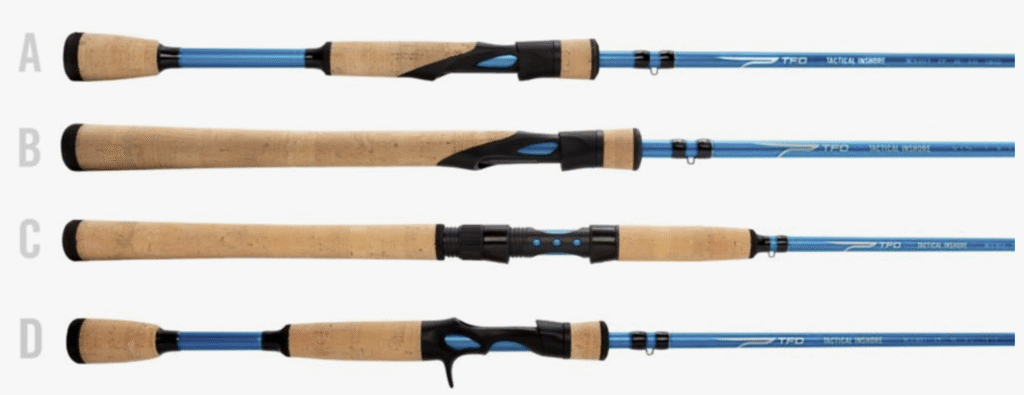
Modern rods sometimes use woven carbon fiber patterns such as 1K, 3K, 6K, or 12K. These numbers refer to the number of filaments per bundle—higher numbers increase strength and improve rigidity but may add weight. Woven patterns are used to reinforce the blank, improve torsional stability, and enhance sensitivity. For example, a 3K weave may add stiffness without drastically increasing weight, while a 12K weave may support heavy-duty saltwater rods.
Nano-Resin and Nano-Carbon Rods
Nano-resin materials improve rod strength by filling microscopic gaps between carbon fibers, reducing brittleness and increasing durability without adding weight. Nano-carbon technology improves sensitivity further, making these rods favorites among competitive bass anglers, fly fishers, and jigging specialists. These technologies push rod performance into elite territory, offering strength-to-weight ratios previously impossible.
Titanium-Integrated Rods
Titanium components appear in high-end rods through reinforced blanks, guides, and reel seats. Titanium guides offer exceptional corrosion resistance and ultra-lightweight performance, improving casting efficiency. Titanium-reinforced blanks help distribute load evenly, reducing breakage risk. Though expensive, these rods deliver long-term durability and peak performance.
How Rod Material Affects Performance
Rod Sensitivity
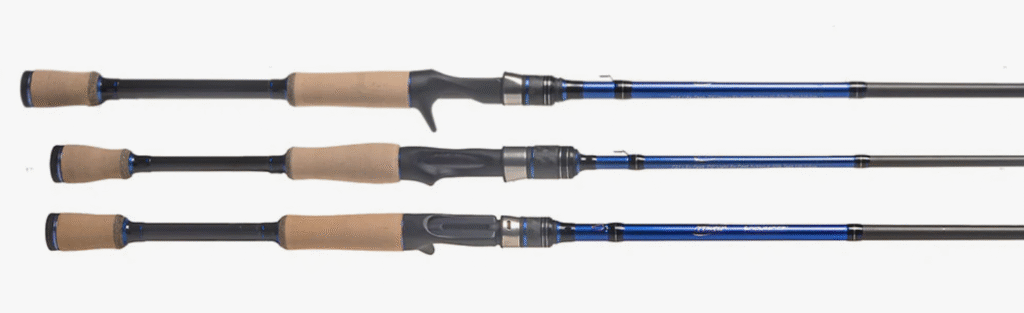
Sensitivity determines how clearly anglers feel vibrations. Graphite leads the pack, followed by composites, fiberglass, and bamboo. Sensitive rods help detect light bites, bottom composition, and subtle lure action—crucial for finesse techniques.
Rod Strength and Durability
Fiberglass is strongest in impact resistance, while graphite excels in tensile strength. Composites offer a balanced approach. Material choice affects longevity, resistance to cracking, and performance under load.
Rod Weight and Fatigue Reduction
Modern graphite and nano-carbon rods drastically reduce fatigue during long fishing sessions. Fiberglass and bamboo weigh more, impacting endurance.
Casting Distance and Accuracy
Stiffer materials (graphite, high-modulus carbon) allow faster recovery speeds, translating into longer, more accurate casts. Softer materials may sacrifice distance but provide smoother presentations.
Material Comparison Table
(Summarized for quick reference)
| Material | Sensitivity | Strength | Durability | Weight | Best For |
|---|---|---|---|---|---|
| Bamboo | Low-Med | Medium | Good (with care) | Heavy | Traditional fly fishing |
| Fiberglass | Low | High (impact) | Excellent | Heavy | Beginners, crankbaits, saltwater |
| Graphite | High | High (tensile) | Good | Light | Finesse, bass, trout |
| Composite | Medium | High | Great | Medium | Versatile, multi-species |
Choosing the Right Rod Material
For Beginners
Fiberglass and composite rods offer durability, affordability, and forgiving action—ideal for learning.
For Freshwater Anglers
Graphite excels for bass, trout, crappie, and finesse-style fishing. Composites work well for crankbaits and trolling.
For Saltwater Anglers
Fiberglass, composites, and titanium-reinforced rods resist corrosion and handle high-stress fights.
For Competitive Anglers
High-modulus graphite, nano-carbon, and titanium-integrated rods deliver elite-level sensitivity and accuracy.
How Manufacturing Techniques Influence Rod Quality
Manufacturing affects performance as much as raw materials.
Rod Blank Construction
Single-piece rods are more sensitive and stronger overall, while multi-piece rods offer portability.
Resin Systems
Nano-resin increases impact resistance and reduces micro-fractures, improving longevity.
Guide and Handle Materials
EVA, cork, aluminum, titanium, and carbon fiber components influence comfort, sensitivity, and balance.
Common Myths About Fishing Rod Materials
- “Graphite rods always break easily.”
Modern graphite is engineered to withstand significant load when used properly. - “Fiberglass rods are outdated.”
They remain essential for crankbait fishing, saltwater use, and heavy-duty scenarios. - “Bamboo rods are only decorative.”
High-quality bamboo rods are fully functional and beloved in traditional fly fishing.
Future of Fishing Rod Materials
The future brings AI-designed blanks, sustainable material alternatives, and predictive carbon-layering technology. Rods may soon be optimized digitally before manufacturing, allowing unprecedented customization. Bio-resins, recycled carbon, and eco-friendly fibers are becoming more common. Tomorrow’s rods will be lighter, stronger, and more sustainable than ever.
Conclusion
Fishing rod materials define how a rod performs in every aspect—casting, fighting, sensitivity, weight, and lifespan. From bamboo’s historical charm to graphite’s cutting-edge precision, each material offers unique benefits. Understanding these differences empowers anglers to select the perfect rod for their needs, experience level, and fishing style.
Unique FAQs About Rod Material

1. What is the best material for beginners?
Fiberglass or composite rods due to their durability and forgiving action.
2. Are graphite rods better than fiberglass?
For sensitivity and lightweight performance—yes. For durability and toughness—fiberglass wins.
3. What rod material lasts the longest?
Fiberglass generally has the longest lifespan due to its incredible impact resistance.
4. Do expensive materials make a big difference?
For professionals or finesse anglers, yes—premium materials significantly enhance sensitivity and performance.
5. What material is best for saltwater fishing?
Fiberglass, composites, or titanium-reinforced graphite rods due to corrosion resistance and strength.