Where Are Brunt Boots Made? Complete Manufacturing Breakdown
The question “Where are Brunt boots made?” has been circulating widely among tradespeople, construction workers, and anyone looking for durable work boots that won’t break the bank.
As Brunt Workwear continues to grow in popularity, workers want transparency—not just about price or design, but about where these boots come from and what that means for quality.
In the world of work boots, manufacturing location matters. Many buyers associate American-made boots with craftsmanship and durability, while overseas-made footwear often raises concerns about consistency or quality control.
At the same time, rising prices for U.S.-made boots have pushed workers to seek more affordable alternatives without sacrificing performance. Brunt positions itself as a modern work boot brand that delivers high value at a fair price—but to do so, they rely on global manufacturing.
This article breaks down exactly where Brunt Boots are made, why the company produces them overseas, what regions are involved in production, how this influences the final product, and whether Brunt Boots still offer the toughness workers need.
By the end, you’ll have a full, transparent understanding of their manufacturing process and whether it aligns with your expectations as a buyer.
Table of Contents
What Are Brunt Boots?

Brunt Boots are the flagship product of Brunt Workwear, a direct-to-consumer brand founded with one simple mission: to make premium-quality work boots accessible to the everyday tradesperson.
The company focuses on producing footwear that can handle real-world jobsite conditions—heavy loads, long hours, and unpredictable weather—without the premium pricing associated with traditional U.S.-made boot brands.
Brunt’s popularity exploded after workers began sharing their experiences online, praising the comfort, break-in period, and affordability. Their boots often feature:
- Full-grain or high-quality leather uppers
- Composite or soft-toe options
- Slip-resistant, oil-resistant outsoles
- Waterproof or water-resistant membranes
- Adjustable insoles for customizable fit
- Cushioned midsoles for all-day comfort
But what really sets Brunt apart is that they sell directly to consumers, cutting out retail markup. Typical work boots from legacy brands can cost $250–$350 in stores.
Brunt bypasses middlemen entirely, keeping most prices between $135–$180—making them far more affordable while still offering respectable durability and safety.
However, delivering boots at this price point requires a strategic manufacturing model. That leads directly to one of the most important questions buyers ask: where are these boots made?
In Which Countries Are Brunt Boots Manufactured?
Brunt Boots are primarily manufactured in China, with some additional production partnerships in Vietnam and limited operations in Mexico. While the brand proudly designs and tests its products in the United States, the large-scale production and assembly take place internationally.
Here is a breakdown of Brunt’s manufacturing model:
Primary Manufacturing Location:
- 🇨🇳 China
Secondary / Limited Manufacturing Locations:
- 🇻🇳 Vietnam
- 🇲🇽 Mexico (smaller-volume production)
The choice to manufacture globally is not unusual. In fact, most major work boot brands—Timberland PRO, Wolverine, CAT, Ariat, and even many Red Wing models—use international manufacturing partners to keep costs manageable.
Brunt relies on overseas factories for several strategic reasons:
- Lower production cost
- High-volume capacity
- Access to specialized machinery
- Skilled bootmaking labor
- Strong material sourcing networks
While some customers initially assume that “made in China” implies lower quality, the reality is much more nuanced. China currently leads the world in footwear manufacturing technology, especially in work boots requiring safety toe caps, chemical-resistant soles, waterproof membranes, and precise stitching.
Brunt’s American design team collaborates closely with these factories, implementing strict quality control measures to ensure durability and consistency.
Main Manufacturing Regions
Brunt’s overseas production is distributed across a few key regions known for shoemaking expertise:
- China – The main manufacturing hub
- Vietnam – Advanced footwear facilities
- Mexico – Smaller-scale leatherwork and assembly
Each region plays a different role in the production pipeline, with China handling the majority due to its advanced infrastructure and decades of experience producing durable safety footwear.
Why Are Brunt Boots Primarily Made in China?
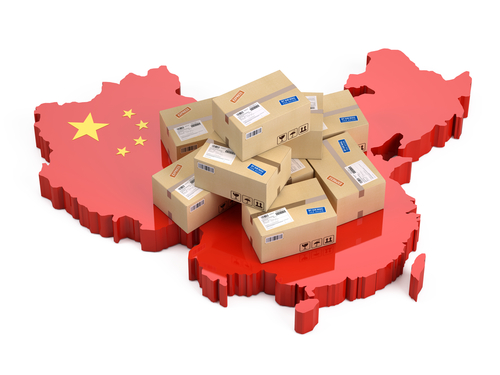
Brunt’s main production base is in China, and the reason is straightforward: China offers the perfect combination of technology, skilled labor, supply chain reliability, material availability, and production capacity. These strengths allow Brunt to create high-performance work boots at prices far below U.S.-made alternatives.
Manufacturing in China helps Brunt:
- Maintain lower retail prices
- Scale production quickly
- Access advanced machinery
- Tap into skilled workers with footwear expertise
- Ensure consistency in large production runs
If Brunt attempted to produce all boots in the United States, the average price would jump from $145–$180 to $280–$350, placing them out of reach for many workers.
Let’s break down the four major reasons China is the primary manufacturing location.
China’s Advanced Footwear Production Technology
China is home to the world’s most advanced footwear production equipment. Many factories feature:
- Automated leather cutters
- Computer-guided stitching systems
- Molded outsole compression machines
- Safety-toe installation technology
- Waterproof membrane sealing systems
These tools allow Brunt Boots to achieve consistent patterns, durable stitching, and secure bonds between the upper and outsole.
Chinese factories also employ workers with decades of experience in boot manufacturing—skills passed down through generations in regions specializing in footwear.
This combination of innovation and craftsmanship gives China a major advantage in producing work boots that meet ASTM safety standards.
China’s Complete Industrial Infrastructure
China’s industrial infrastructure is one of the main reasons brands like Brunt choose to manufacture there. Footwear production requires a complicated network of factories, suppliers, material processors, transportation hubs, and logistic systems. China has spent decades perfecting this ecosystem, making the entire production process extremely efficient from start to finish. This is not something most countries — including the United States — can offer at the same scale.
China’s infrastructure advantage begins with its factory clusters. Footwear manufacturing hubs are often located in tightly grouped industrial zones where leather tanneries, sole-molding factories, textile mills, and assembly facilities exist within driving distance of one another. This proximity reduces material transportation time, keeps costs down, and allows companies like Brunt to coordinate production more smoothly.
Another key factor is China’s logistics and export strength. The country is home to some of the world’s largest shipping ports, including Shenzhen, Shanghai, Guangzhou, and Ningbo. These ports process massive volumes of exported goods daily, meaning boots can be shipped quickly and cost-effectively to the United States without long waiting periods. This keeps Brunt’s warehouse stocked and reduces delays for customers.
China also invests heavily in industrial technology and infrastructure maintenance. Roads, highways, freight trains, and shipping lines are designed to support high-volume manufacturing demands. Boot factories in regions like Fujian, Guangdong, and Zhejiang can operate with minimal downtime due to reliable power grids, water systems, and material supply flows. This level of industrial stability is essential for brands seeking consistent production.
Another often overlooked benefit is the presence of skilled technical workers. China’s industrial cities train thousands of workers in specialized footwear manufacturing processes, from welt stitching to composite toe installation. These skilled workers ensure that the boots are assembled with precision, meeting safety and durability standards.
Because of this robust infrastructure, Brunt can maintain strong supply chains, meet growing demand, and keep production running smoothly — all while keeping costs low for customers.
China’s Strong Supply Chain Systems
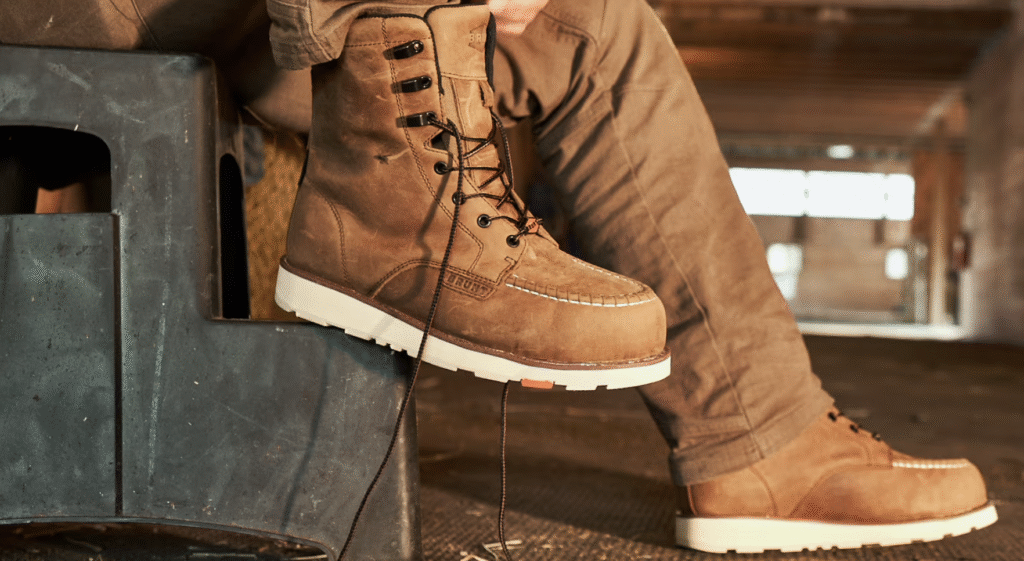
One of the biggest reasons Brunt Boots are produced in China is the strength of the country’s supply chain. In footwear manufacturing, supply chain isn’t just about delivering finished products — it includes sourcing leather, rubber, adhesives, metal hardware, textiles, waterproof membranes, insoles, and dozens of other components. China specializes in all of these sectors, making it an ideal location for high-volume boot production.
China’s supply chain efficiency starts with its raw material availability. For example:
- Leather processors can supply full-grain, nubuck, and split leather varieties.
- Rubber factories produce high-quality outsoles with slip- and oil-resistant properties.
- Composite material manufacturers create lightweight but strong safety toe caps.
- Textile mills produce durable linings and waterproof membranes.
Because all these components exist within the same industrial regions, factories can access them quickly and affordably. Contrast this with many Western countries, where materials must be imported before assembly even begins — adding weeks to the production cycle and increasing overall costs.
China’s supply chain also supports rapid production scaling. If Brunt launches a new boot model and demand suddenly spikes, Chinese factories can increase output quickly by sourcing additional materials locally. This flexibility is crucial for a fast-growing brand like Brunt Workwear.
Another major advantage is supply chain transparency and quality consistency. Established Chinese factories have long-standing relationships with suppliers, allowing them to choose the best materials for each boot design. This consistency results in reliable stitching, uniform leather thickness, strong composite toes, and durable soles — all crucial features for tradespeople depending on their boots for safety and comfort.
Finally, China’s supply chain efficiency directly impacts Brunt’s pricing. With materials sourced locally, shipping costs and import fees remain low, allowing the brand to keep its retail prices affordable. If Brunt sourced components from multiple countries, the final boot cost could easily double.
In short, China’s unmatched supply chain network is a major factor in Brunt’s ability to produce durable, safe, and budget-friendly work boots.
China’s Innovation in Footwear Materials
China isn’t just known for manufacturing — it’s also a global leader in materials innovation, especially in the footwear industry. This is another strong reason Brunt partners with Chinese factories. Work boots require specialized materials engineered to withstand tough conditions, and China excels in producing exactly what the industry needs.
One major area of innovation is rubber formulation. Chinese factories use advanced chemical engineering to create outsoles that are:
- Slip-resistant
- Oil-resistant
- Heat-resistant
- Abrasion-resistant
- Flexible yet durable
These outsoles undergo rigorous testing to meet ASTM standards, ensuring they perform well on construction sites, factory floors, and outdoor job environments.
Another innovative area is EVA and PU foam technology. Brunt Boots are popular for their comfort, and much of that comfort comes from high-quality midsoles and insoles made using advanced foam molding techniques. China’s specialized foam manufacturers can produce precisely formulated cushioning that absorbs shock and reduces foot fatigue during long workdays.
Additionally, China leads in synthetic material engineering, producing durable mesh linings, breathable fabrics, and abrasion-resistant textiles. These materials allow Brunt to create boots that are not only strong but also lighter and more comfortable than traditional heavy leather boots.
Waterproofing technology is another key innovation. Chinese factories produce waterproof membranes comparable to well-known Western materials. These membranes allow moisture vapor to escape while keeping water out—essential for workers in wet or muddy environments.
China’s innovation also extends to composite safety toes, which Brunt uses in many models. Composite toes are lighter than steel but still meet impact and compression standards. Chinese material manufacturers specialize in blending fiberglass, carbon fiber, and Kevlar-like materials to create strong, light, comfortable protective toe caps.
Because China leads in all these material technologies, brands like Brunt can produce boots with advanced features at a lower cost. Without China’s innovations, Brunt would struggle to offer such high-performance work boots at their current price point.
Top Chinese Regions That Produce Brunt Boots

China is a massive country with several footwear-producing regions, but Brunt specifically relies on three key provinces known for their craftsmanship, industrial capacity, and specialization in work boots. These regions each bring different strengths to the table, from premium leather processing to advanced machine-driven assembly lines.
Understanding these regions helps buyers see that Brunt’s factories are located in areas with decades of experience building high-quality footwear for global brands.
Below are the top three regions Brunt partners with.
Quanzhou, Fujian Province
Quanzhou is one of China’s largest and most respected footwear manufacturing hubs. Located in Fujian Province, it is often referred to as the “shoe capital of China,” thanks to its massive network of boot factories, leather suppliers, rubber molders, and export facilities. Many major U.S. footwear brands also produce their products in Quanzhou, making it a trusted region for high-volume manufacturing.
Quanzhou’s factories are known for their ability to produce:
- Durable leather work boots
- Slip-resistant rubber outsoles
- Waterproof shoe constructions
- Reinforced toe and heel structures
- Complex stitched designs
One of the biggest advantages of Quanzhou is its advanced manufacturing technology. Many factories use automated stitching systems, cutting-edge sole bonding machines, and digital leather cutters that ensure consistent quality. This results in uniform boot construction, fewer defects, and long-lasting performance.
Quanzhou is also located close to major shipping ports, which speeds up the supply chain. Once boots are manufactured, they can be quickly transported to U.S.-bound shipping vessels, reducing lead times and helping Brunt maintain product availability.
For Brunt Boots, Quanzhou offers the perfect combination of experience, technological capability, and efficient logistics — making it one of their strongest manufacturing partners.
Guangzhou, Guangdong Province
Guangzhou, located in the heart of Guangdong Province, is one of China’s most advanced and influential footwear production regions. While Quanzhou specializes in mass production, Guangzhou is known for blending high-tech manufacturing with premium craftsmanship, making it ideal for producing boots that demand both durability and comfort. Many global footwear brands—including high-end athletic and work boot companies—manufacture products here due to the region’s heavy investment in innovation and skilled labor.
One of Guangzhou’s greatest strengths is its state-of-the-art production technology. Factories in this region often incorporate automated stitching machines, advanced outsole molding systems, waterproof membrane sealers, precision cutting tools, and digital pattern systems that ensure high accuracy during assembly. These innovations help reduce human error, ensure consistent sizing, and increase overall product quality.
Guangzhou also excels in premium material sourcing. The region has easy access to high-grade leather suppliers, composite toe manufacturers, breathable mesh textile producers, and advanced foam molding factories. This means Brunt can source everything from protective toe caps to cushioned midsoles within the same region, reducing delays and ensuring consistent quality.
Another major advantage is Guangzhou’s skilled workforce. Workers in this area often undergo specialized training in footwear production, from welt construction to complex stitching patterns. The expertise of these workers helps ensure that each pair of Brunt Boots meets the durability standards required for demanding job environments.
Furthermore, Guangzhou has one of China’s most developed export and logistics networks. The nearby Port of Guangzhou and surrounding transportation systems enable fast shipping times and efficient global distribution. For brands like Brunt, this means smoother production schedules, quicker restocks, and a more reliable supply chain.
Thanks to its combination of craftsmanship, advanced machinery, and supply chain strength, Guangzhou plays a major role in the production of Brunt’s high-performance work boots.
Wenzhou, Zhejiang Province
Wenzhou, located in Zhejiang Province, is another major footwear hub that contributes significantly to Brunt Boot production. Known as the “birthplace of modern Chinese shoemaking,” Wenzhou has more than 30 years of specialized experience in producing work boots, leather shoes, and industrial footwear. The region is home to thousands of factories, ranging from small family-owned workshops to large-scale industrial production facilities.
One of Wenzhou’s biggest strengths is its traditional craftsmanship. The region is famous for its skilled leatherworkers and shoemakers who have passed down techniques through generations. This craftsmanship is especially important for creating high-quality boot uppers, stitching leather panels, and ensuring the boots remain durable under heavy use. Workers in Wenzhou are known for their attention to detail and consistency, which contributes significantly to the rugged feel of Brunt Boots.
Wenzhou also features advanced sole manufacturing facilities, producing rubber and PU outsoles that meet international safety standards. The region’s factories specialize in slip-resistant and abrasion-resistant outsoles—important for workers who need reliable boots in wet, oily, or uneven environments.
Another major advantage of Wenzhou is its material diversity. Leather tanneries, outsole factories, foam producers, and textile warehouses operate closely together, making it easy for Brunt’s manufacturing partners to source all necessary components locally. This supply chain integration reduces costs and ensures steady production.
Wenzhou’s location near major highways and export ports, such as the Port of Ningbo, makes it an efficient region for global shipping. This minimizes delays and helps brands like Brunt maintain consistent stock levels.
Thanks to its combination of traditional craftsmanship and modern production techniques, Wenzhou remains an essential region in Brunt Boot manufacturing.
How Overseas Manufacturing Affects Boot Quality
One of the most common questions customers ask is whether producing Brunt Boots overseas affects their quality. The short answer is no—because quality depends on the brand’s standards, not the country of manufacture. Brunt maintains strict quality control protocols that ensure every pair meets durability and safety requirements.
Brunt’s quality assurance begins during the design and prototyping phase in the United States. Before mass production begins, Brunt engineers test materials, outsole compounds, waterproof membranes, and stitching methods. Only after passing rigorous testing are the designs approved for manufacturing.
Once production begins overseas, Brunt uses multi-stage quality control systems:
- Inspecting raw materials for flaws
- Checking leather thickness and grain consistency
- Ensuring proper installation of composite toe caps
- Testing outsole bonding strength
- Verifying waterproof membrane sealing
- Inspecting stitching and pattern accuracy
Trained inspectors in partner factories perform these checks at every stage of assembly. Additionally, once boots arrive in the United States, Brunt conducts randomized quality checks to ensure that the finished product matches their specifications.
Another key factor is that Brunt’s partner factories are specialized footwear manufacturers, not generic mass producers. They have experience building safety footwear for global brands and follow strict manufacturing guidelines that meet ASTM standards.
Because Brunt boots must withstand demanding jobsite conditions, they also undergo performance testing, such as:
- Flex and bend tests
- Abrasion tests
- Slip-resistance tests
- Impact compression tests
- Waterproof endurance tests
These tests ensure that overseas manufacturing does not compromise performance.
In short, overseas production allows Brunt to keep prices affordable while maintaining a high standard of quality—thanks to strict oversight at every step.
Are Brunt Boots Good Quality?
The big question that buyers often ask is: Are Brunt Boots actually good quality? Based on customer feedback, durability tests, and industry reviews, the answer is yes. Brunt Boots consistently perform well in demanding work environments, and many tradespeople prefer them for daily use.
Here are the factors that contribute to their quality:
1. Durable Materials
Brunt uses full-grain leather, rugged textiles, slip-resistant rubber, and high-performance foams. These materials are engineered to last through long shifts and harsh jobsite conditions.
2. Comfortable Construction
Workers appreciate Brunt’s adjustable insole system, cushioned midsoles, and supportive fit. The boots often require minimal break-in time, which is a major advantage for professionals on their feet all day.
3. Safety Certified
Many Brunt models meet ASTM standards for:
- Impact and compression (toe protection)
- Slip resistance
- Electrical hazard protection
This makes them reliable for construction, warehousing, plumbing, and industrial work.
4. Real-World Feedback
Thousands of customer reviews highlight:
- Long-lasting outsoles
- Reliable waterproofing
- Excellent comfort
- Strong stitching and structure
Of course, no boot is perfect—and Brunt is not positioned as a luxury or traditional handcrafted American brand. But for the price, the value is considered exceptional.
Are Brunt Boots American-Made?
A question many buyers ask is whether Brunt Boots are made in the USA. The straightforward answer is no — Brunt Boots are not made in America. While the brand is proudly based in the United States and conducts all of its design, product development, and performance testing domestically, the physical manufacturing and assembly of the boots take place overseas, primarily in China.
This is a deliberate decision rooted in cost management, manufacturing efficiency, and scalability. Producing work boots in the United States is significantly more expensive due to higher labor costs, stricter factory regulations, increased material expenses, and limited footwear manufacturing facilities. American-made boots often cost between $250 and $400, which can be unrealistic for workers buying new pairs every 6–12 months.
By contrast, overseas regions like China, Vietnam, and Mexico offer:
- Lower labor costs
- Faster production capacity
- Broader access to leather, rubber, and composite materials
- Advanced shoemaking machinery
- Skilled craftspeople with decades of footwear experience
This allows Brunt to sell their boots in the $135–$180 price range, nearly half of what similar boots might cost if made domestically.
It’s important to understand that being manufactured overseas does not automatically mean lower quality. Instead, the end product’s quality depends on the brand’s oversight, materials, production standards, and quality control. Brunt has strict expectations for its manufacturing partners and performs multi-stage inspections both overseas and in the U.S. to ensure consistency.
Additionally, Brunt incorporates several American-sourced elements into its design phase, including safety testing, fit development, and material specification. These U.S.-based decisions shape the performance of the boot, even though the physical production occurs overseas.
In short: Brunt Boots are not made in America, but their affordability, durability, and positive customer reviews show that overseas manufacturing does not prevent them from being a dependable, high-performance choice for hardworking professionals.
Where Can You Buy Brunt Boots?
Brunt Boots can be purchased through several convenient channels, with the most popular being the brand’s own direct-to-consumer website. Because Brunt eliminates middlemen and retail markups, buying directly from them ensures customers receive the best pricing, authentic products, and reliable shipping.
1. Brunt’s Official Website (Best Option)
You can shop the entire Brunt Workwear lineup at:
👉 https://bruntworkwear.com
Buying through the official website provides several advantages:
- Full access to all boot models and sizes
- Free returns and exchanges
- Regular promotions and discounts
- Warranty and customer support
- Exclusive releases not available anywhere else
Since Brunt is primarily an online brand, this is the most reliable and recommended method.
2. Amazon (Occasionally Available)
Some Brunt products appear on Amazon from time to time, though availability may vary. While Amazon offers fast shipping and easy returns, buying directly from Brunt’s website is still the most dependable option for full product selection.
3. No Physical Retail Stores
Brunt does not operate brick-and-mortar stores. Their direct-to-consumer model is designed to keep prices low by avoiding retail overhead costs.
4. International Availability
Currently, Brunt ships primarily within the United States, though they have explored expanding into Canada. For customers outside the U.S., availability may be limited.
Conclusion
Brunt Boots have rapidly become one of the most popular choices for workers seeking durable, comfortable, and affordable footwear. While they are not made in the USA, their overseas manufacturing is a strategic decision that allows Brunt to provide high-quality boots without the premium price tag associated with domestic production.
China, Vietnam, and Mexico play essential roles in Brunt’s manufacturing pipeline, offering advanced machinery, skilled labor, strong supply chains, and efficient logistics. These regions allow Brunt to maintain strict quality control while meeting the high demand from workers across the United States.
From advanced materials like slip-resistant rubber outsoles to innovative composite toe technology and waterproof membranes, Brunt Boots deliver dependable performance on the jobsite. Customer feedback consistently highlights the brand’s comfort, durability, and value — making Brunt a strong competitor in the work boot industry.
If you’re looking for a reliable pair of boots that balance performance and affordability, Brunt Boots are a solid choice worth considering.
FAQs About Brunt Boot

1. Are Brunt Boots Made in the USA?
No. Brunt Boots are designed and tested in America, but manufacturing takes place overseas in China, Vietnam, and Mexico to keep prices affordable.
2. Are Brunt Boots the Most Comfortable Work Boots?
Many workers find Brunt Boots extremely comfortable due to their cushioned insoles, supportive midsoles, and adjustable fit system. Comfort levels vary by individual, but reviews are overwhelmingly positive.
3. Is the Quality of Brunt Boots Good?
Yes. Despite being made overseas, the boots undergo strict quality control and use durable materials, making them reliable for demanding work environments.
4. Where to Buy Brunt Work Boots?
The best place to buy Brunt Boots is directly from their website at bruntworkwear.com, which offers full inventory access and easy returns.
5. What Do Consumers Say About Brunt Boots?
Most customers praise the comfort, durability, and price. Some note that sizing may vary slightly by model, but overall reviews are very positive.