Where Are Crocs Made? Crocs China Supplier Manufacturing
Crocs are easily one of the most recognizable footwear styles in the world, loved by millions for their comfort, lightweight feel, and quirky design. With their global popularity skyrocketing in recent years, many customers have begun asking an important question: Where are Crocs actually made?
As the brand grows, so does the curiosity surrounding its manufacturing locations, factories, and supply chain—especially when buyers want to ensure they’re getting authentic, high-quality Crocs instead of fakes.
Like most large footwear companies, Crocs relies heavily on international manufacturing, working with multiple factories across Asia, Europe, and North America.
However, the majority of Crocs production today happens in China, where advanced foam-molding technology, large-scale capacity, and strong supplier networks make production efficient and affordable. This has led many people to search for terms like “Crocs China supplier”, “Where are Crocs made?”, and “Are Crocs made in China good quality?”
This article breaks down everything you need to know about Crocs manufacturing—from the countries involved, to why China plays the biggest role, to how the brand maintains quality control across global factories.
Whether you’re a buyer checking authenticity, a retailer researching suppliers, or simply curious about Crocs production, this complete guide explains everything in clear, easy-to-understand detail.
Table of Contents
What Are Crocs?

Crocs is an American footwear company founded in 2002, famous for its lightweight, slip-resistant, and water-friendly foam clogs. The company originally designed Crocs as boating shoes, but their comfort and practicality helped them spread quickly into casual wear, workplace footwear, and even healthcare settings. Today, Crocs are used by chefs, nurses, travelers, and families around the world.
The signature material used in Crocs is Croslite, a proprietary closed-cell resin foam. Unlike traditional rubber or plastic shoes, Croslite is:
- Extremely lightweight
- Water-resistant
- Odor-resistant
- Non-slip
- Soft and cushion-like
- Easy to clean
Croslite is shipped to Crocs factories worldwide, where it’s molded into different shoe shapes using high-pressure, heated molds.
Crocs’ rise in popularity can also be credited to their unique marketing. Collaborations with celebrities, designers, and brands—such as Post Malone, Balenciaga, and Justin Bieber—have made Crocs both fashionable and practical. As demand grew, the company expanded its manufacturing footprint to multiple countries to meet global orders.
Understanding what Crocs are and the materials they use helps explain why the brand needs a diverse, globally distributed manufacturing network. Croslite requires specialized machines and precise molding conditions, and many international factories—especially in China—are perfectly equipped for this type of production.
Where Are Crocs Manufactured?

Crocs are manufactured in several different countries, with production distributed across Asia, Europe, and North America. The company uses a global manufacturing model to ensure they can supply Crocs to millions of customers each year while keeping prices affordable.
Here are the primary Crocs manufacturing locations:
Main Crocs Production Countries
- 🇨🇳 China (largest manufacturing base)
- 🇻🇳 Vietnam (fast-growing production hub)
- 🇲🇽 Mexico (regional supply for the Americas)
- 🇧🇦 Bosnia & Herzegovina (European manufacturing)
- 🇮🇩 Indonesia (foam footwear specialization)
In the past, Crocs also manufactured in the United States, particularly in Colorado and Mexico, but U.S. factories officially closed in 2018 due to restructuring.
Why so many countries? Simple: Crocs is a global brand, and distributing production helps reduce shipping delays, prevent shortages, and stabilize inventory during high demand periods. It also reduces risk—if one country experiences supply chain issues, Crocs can shift production to another region.
Still, the largest share of Crocs production happens in China, which offers advanced molding equipment, skilled footwear workers, and the ability to produce massive volumes efficiently.
Why Are Most Crocs Made in China?
There’s a simple reason most Crocs are made in China: China has the world’s strongest footwear manufacturing ecosystem, especially for foam-based shoes. Crocs require advanced injection-molding machines, high-pressure Croslite processing equipment, and experienced technicians who know how to operate the machinery.
China offers everything Crocs needs, including:
- Low-cost, high-volume production
- Advanced manufacturing technology
- Skilled workers with decades of experience
- Reliable suppliers for soles, straps, molds, and hardware
- Efficient export logistics
- Shorter lead times
Producing Crocs in the United States would dramatically increase the cost, pushing retail prices far beyond the current range. By manufacturing in China and other Asian countries, Crocs keeps prices accessible to everyday customers.
Additionally, China is home to several specialized EVA foam production hubs, making it ideal for Croslite molding. The country also has high-density industrial zones where factories, material suppliers, and mold makers work closely together, improving both production speed and consistency.
In other words, Crocs manufactures in China because the country has the technology, capacity, workforce, and efficiency needed to produce millions of pairs per year.
China’s Established Footwear Supply Chain
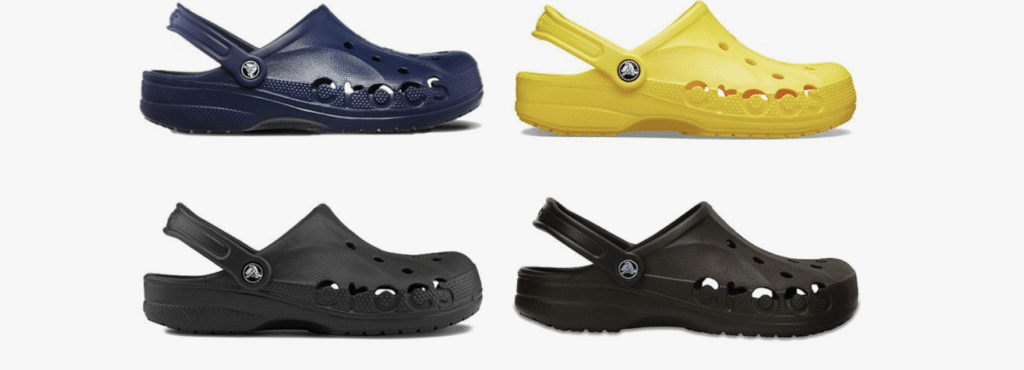
China’s footwear supply chain is one of the most advanced and efficient in the world. This is a major reason Crocs relies on Chinese manufacturers to produce huge quantities of its foam clogs and sandals every year.
The Chinese supply chain includes:
- Croslite-compatible foam producers
- Rubber outsole manufacturers
- EVA molding machine suppliers
- Plastic strap and buckle factories
- Mold-making specialists
- Skilled footwear assembly workers
All of these suppliers operate within close proximity to Crocs manufacturing partners. This means parts don’t need to be shipped across multiple countries, reducing delays, improving consistency, and lowering production cost.
China also has major footwear export cities like:
- Shenzhen
- Guangzhou
- Xiamen
- Shanghai
- Ningbo
These cities have world-class ports, making it easy for Crocs to ship finished shoes to the United States, Europe, and other global markets.
Because of this supply chain strength, China remains Crocs’ most reliable and efficient production base.
China’s Advanced Manufacturing Technology
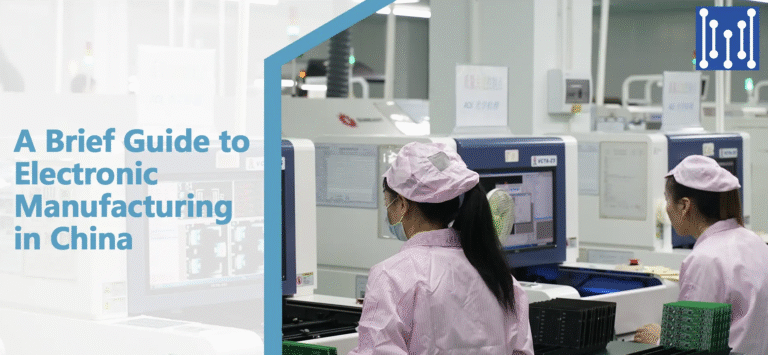
China’s dominance in Crocs manufacturing isn’t just about cost—it’s also about technological superiority in foam-based footwear production. Crocs shoes are made with Croslite, a proprietary closed-cell resin foam that requires very specific conditions during production, and Chinese factories are uniquely equipped with the advanced machinery needed to mold Croslite properly. This level of technology ensures that each pair of Crocs is lightweight, supportive, and consistent in quality.
The core of Crocs manufacturing relies on EVA injection-molding machines and high-precision foam molding equipment. China produces and operates some of the most advanced versions of these machines—including multi-injection systems and high-pressure molding units—allowing factories to create consistent shapes, textures, and densities across every shoe. Crocs cannot be handmade; they depend on exact temperatures, pressures, and timing during mold production, something Chinese factories have mastered over years of producing similar foam footwear.
Chinese manufacturers also use CNC-controlled mold-making machines, which allow for extremely fine details. This is why official Crocs have perfect textures, ventilation holes, and strap alignment—while low-quality replicas often have inconsistent edges or unbalanced ventilation placements.
Beyond the molding machines, China’s factories use computerized automation systems that help control production flow, temperature, timing, and resin injection levels. Such precision ensures that Croslite remains uniform from batch to batch, preventing issues such as:
- Overly rigid foam
- Inconsistent color tones
- Uneven expansion
- Improper fit
- Weak straps or knocked-down heels
China also invests heavily in smart factory technologies, including robotic arms, automated cooling systems, and digital inspection tools. This results in fewer defects and higher overall output.
The combination of cutting-edge machinery and skilled technicians makes China the most practical—and most consistent—manufacturing hub for Crocs. Without this level of technological capability, Crocs would struggle to produce footwear at their current scale.
China’s Skilled Footwear Workforce
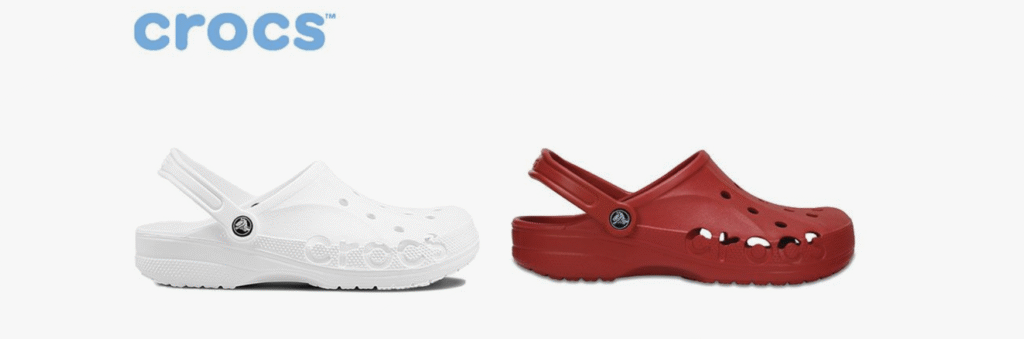
Another major advantage China brings to Crocs manufacturing is its highly skilled footwear workforce. China has been a global leader in shoe production for more than three decades, and regions like Guangdong, Fujian, and Zhejiang have entire populations trained in specific aspects of shoemaking, including foam molding, strap assembly, outsole fusion, and quality control.
Building Crocs requires far more skill than most people realize. Workers must understand how to operate injection molds, manage Croslite temperature cycles, and monitor automated systems for defects. Croslite expands, cools, and solidifies rapidly, making timing crucial. Any mistake—a few seconds too long in a mold or improper cooling—can ruin a batch.
Chinese workers are trained to recognize signs of production errors and fix them immediately. This includes spotting:
- Air bubble formations
- Material shrinkage
- Strap misalignment
- Unbalanced colors
- Mold overflows
Their experience helps ensure that Crocs are consistently produced to brand standards.
Factories in China also maintain specialized roles within the footwear production line, such as:
- Mold technicians
- Croslite material handlers
- Quality control inspectors
- Strap assembly workers
- Finishing and trimming operators
- Color blending specialists
Each role requires skill and precision that only experienced footwear laborers can provide. Many of these workers have spent over a decade working with EVA and Croslite-like materials, making them some of the most knowledgeable foam footwear experts in the world.
In addition, Chinese manufacturers actively train workers on updated machinery and production processes. This helps maintain consistency while reducing waste—a critical factor for a polymer-based product like Crocs.
The combination of deep experience, technical training, and specialized skill makes the Chinese workforce a vital component of Crocs manufacturing success.
Top China Suppliers and Manufacturers for Crocs
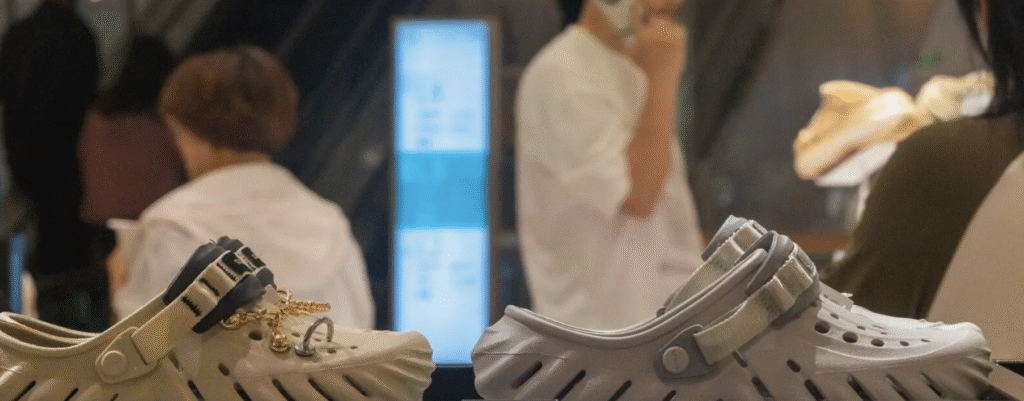
Crocs works with multiple manufacturing partners across China, each specializing in different aspects of foam footwear production. These suppliers are typically located in regions known for high-volume shoe manufacturing, advanced molding capabilities, and easy access to export ports.
The main functions these suppliers handle include:
- Croslite molding
- EVA injection processing
- Strap assembly
- Mold production and maintenance
- Outsole creation for non-clog styles
- Packaging and export preparation
These factories go through strict evaluation before partnering with Crocs, ensuring they meet global safety and quality standards. Most also produce footwear for other major brands, meaning they have the infrastructure and workforce to handle millions of pairs annually.
Below are the top three regions in China where Crocs manufacturing takes place, along with their specific strengths.
Dongguan, Guangdong Province
Dongguan is one of the world’s largest footwear manufacturing cities, and it plays a crucial role in Crocs production. Known for its advanced industrial technology, Dongguan specializes in EVA foam manufacturing, injection-molding equipment, and large-scale footwear assembly—perfect for producing Croslite-based clogs and sandals.
Factories in Dongguan often handle:
- High-volume Croslite molding
- Multi-color Crocs production
- Jibbitz-friendly hole molds
- Precision strap attachment
- Slip-resistant sole molding for work-friendly Crocs
Dongguan’s biggest advantage is its access to high-quality EVA and Croslite suppliers. Many of the chemicals and resin blends used in Crocs production are sourced or processed in nearby industrial zones. This proximity helps keep production fast, efficient, and consistent.
The region also benefits from being near Shenzhen and Guangzhou—major port cities with world-class export facilities. This makes shipping Crocs to the United States and Europe quick and predictable, reducing delays during high-demand seasons.
Dongguan’s mix of technological innovation, skilled labor, and supply chain access makes it one of the most important Crocs manufacturing hubs in China.
Quanzhou, Fujian Province
Quanzhou is another major Crocs production region, known for its massive shoe manufacturing clusters, advanced EVA foam technology, and proximity to Xiamen Port—one of China’s major export hubs.
Factories in Quanzhou are capable of producing extremely high volumes of footwear. This region is known for its ability to scale production quickly, which is essential for Crocs when demand spikes or new styles are released.
Quanzhou factories are especially skilled in:
- Lightweight foam footwear
- High-temperature mold processing
- Strap and buckle manufacturing
- Multi-injection color molds
- Kids’ Crocs and smaller-size production
Because Quanzhou has produced athletic shoes, running shoes, and foam sandals for decades, it already has all the machinery and materials needed to produce Crocs efficiently.
Its strong supply chain and deep footwear expertise make Quanzhou a perfect fit for high-volume Croslite shoe production.
Putian, Fujian Province
Putian, in Fujian Province, is another key Crocs manufacturing hub, particularly known for mold-making and specialized material production. Unlike Dongguan and Quanzhou, which focus on high-volume assembly, Putian is highly valued for precision work—especially the production of the molds and tooling necessary for Croslite footwear.
Mold-making is critical in Crocs manufacturing because the shape and fit of each clog or sandal must be exactly replicated across millions of pairs. Putian factories specialize in:
- CNC-machined molds for Croslite injection
- Detailed ventilation hole placement
- Custom strap positioning
- Multi-color molding for limited-edition or fashion collaborations
Many of the molds produced in Putian are shipped to other factories in Dongguan or Quanzhou, where the high-volume molding takes place. The combination of Putian’s precision tooling and the larger factories’ production capacity ensures that Crocs shoes remain consistent in quality, size, and comfort.
Additionally, Putian has a network of material suppliers who specialize in polymer blends suitable for Croslite. These suppliers ensure that every batch of resin meets strict chemical and performance standards, which is essential for durability, odor resistance, and water resistance.
Putian’s factories are also integrated into China’s export logistics network, making it easy to deliver molds and materials to assembly factories or to global markets. This integration ensures that Crocs’ global supply chain remains seamless, even during seasonal spikes in demand.
How Crocs Maintains Quality Across Global Factories

A common concern among buyers is whether Crocs’ overseas manufacturing affects product quality. The short answer is no—Crocs uses strict quality control measures to ensure consistency across all factories, regardless of location.
1. Standardized Materials
Croslite is a proprietary material, and Crocs controls the formulation closely. This standardization ensures that shoes produced in China, Vietnam, or Mexico feel identical in terms of comfort, flexibility, and weight. All suppliers receive exact material specifications and undergo routine audits.
2. Multi-Stage Quality Inspections
Crocs factories implement multiple inspection points:
- Raw material inspection
- In-process monitoring during molding
- Post-production checks for size, color, and shape
- Final packaging inspection
These steps help catch defects early, minimizing the number of flawed products reaching the market.
3. Centralized Testing
All Crocs factories follow centralized testing guidelines defined by Crocs’ R&D teams. Shoes are tested for:
- Wear and durability
- Slip resistance
- Comfort and fit
- Strap strength and ventilation alignment
Testing is performed both in-house at the factories and through Crocs’ U.S. quality assurance teams.
4. Supplier Certification
Crocs only works with suppliers that meet rigorous certification standards for labor practices, safety, and environmental compliance. This ensures ethical manufacturing while maintaining high-quality production standards.
By combining standardized materials, detailed inspections, centralized testing, and certified suppliers, Crocs guarantees that every pair of shoes meets their global quality expectations, regardless of the manufacturing country.
Are Crocs Made in the USA?
Originally, Crocs were partially manufactured in the United States, with assembly operations in Colorado. However, the company phased out U.S. manufacturing around 2018 as part of a strategic cost-cutting and global expansion initiative.
Reasons U.S. manufacturing was discontinued:
- High labor costs compared to Asia
- Limited EVA and foam injection facilities in the U.S.
- Slower production speed and scalability
- Global demand outpacing domestic factory capacity
Today, Crocs’ design and R&D remain U.S.-based, ensuring that all shoes meet the original brand’s comfort, fit, and performance standards. However, production is almost entirely overseas, with China taking the lead, followed by Vietnam, Mexico, Bosnia & Herzegovina, and Indonesia.
While some buyers may prefer U.S.-made products, overseas production allows Crocs to keep prices reasonable ($35–$60 for classic clogs) while still offering durable, comfortable, and safe footwear.
Conclusion
Crocs is a globally recognized footwear brand, and its manufacturing strategy reflects the need to combine high-quality materials, advanced production technology, and scalable manufacturing. While most Crocs are made in China, key regions like Dongguan, Quanzhou, and Putian play specialized roles in producing the Croslite clogs, straps, molds, and outsoles.
China’s skilled workforce, advanced EVA molding technology, and robust supply chain infrastructure make it ideal for high-volume production while maintaining the quality and consistency Crocs is known for. Supplementary manufacturing in Vietnam, Mexico, Bosnia, and Indonesia ensures global supply stability, particularly during peak demand seasons.
Crocs’ commitment to standardized materials, multi-stage quality inspections, and supplier certifications ensures that every pair of Crocs meets performance and comfort expectations, regardless of the factory where it is made. Understanding this manufacturing network helps buyers appreciate why Crocs remain affordable, reliable, and high-performing footwear worldwide.
FAQs About Crocs Made in China

1. Are all Crocs made in China?
No. While China produces the majority of Crocs, other countries such as Vietnam, Mexico, Bosnia, and Indonesia also manufacture shoes for global distribution.
2. Does manufacturing location affect Crocs’ quality?
Not significantly. Crocs maintains strict quality control, standardized materials, and centralized testing across all factories.
3. Are original Crocs better than made-in-China ones?
Yes, if they are authentic Crocs made under the company’s oversight. Location doesn’t determine quality; official production standards do.
4. How can I check if my Crocs are real?
Check for:
- Correct logo on the heel strap
- Croslite material feel
- Quality of ventilation holes and molding
- Packaging with Crocs branding
5. Why did Crocs close U.S. factories?
High labor costs, limited EVA molding facilities, and scalability issues led Crocs to shift most production overseas while keeping design and R&D in the U.S.